Once you’ve come near death from heat stroke, you will never be the same. Every year since 1982 the last days of July herald a creeping PTSD unsettledness that lurks at the boundary of my consciousness. In years when we have cooling monsoon rains nearly every day in Santa Fe, the feelings are a barely noticeable blip beneath the surface of this consciousness.
This tragically rainless and brutally hot summer the fears and anxieties have surfaced like vengeful monsters wrapping choking terror around my neck and heart.
I have done a lot of trauma release work around this and other issues using modalities like Healing Touch, which I practice and teach, and Somatic Experiencing. Most years I merely acknowledge the near-death experience with gratitude that I am still here, still working to raise awareness and action about what is now clearly a climate emergency—far beyond a mere crisis.
I sit in an air-conditioned room, well aware of the privilege I enjoy. Most of the power required to keep me comfortable, functional, and healthy comes from the solar panels I had installed some years ago. At the back of my mind niggles the fear of a power outage, though I try not to give it any attention or energy. In a moment I am cast back to that summer of 1982 in the mountains of Pakistan when extreme heat almost ended this incarnation.
Over the years I have wondered if strangers and even friends just think I’m a weakling or whiner, that my fear of heat is overstated. People who tolerate heat far better than I—but who have never come near death, or even serious exhaustion—cheerfully tell me how tough they are, and how hot and humid it was when they were growing up in various areas of the country and “this is nothing compared to that.”
Only people who have felt seriously ill from heat sickness have an inkling of understanding. As we endured through the hottest July in 125,000 years (immediately following the hottest June) my heart sank to know that many, many more people will come to know what it is like to become weak and ill from heat stress. Many, especially the unhoused and outdoor workers, both in the Global North as well as the Global South, will develop kidney disease in their youth or middle age, and many will die of heat illness and its complications.
I looked for my journal of that terrible time and, oddly, it was the only journal from my years of intensive travel that I could not find. Instead, I reread my account of my near-death experience in my published memoirs, Sisters on the Bridge of Fire: One Woman’s Journeys in Afghanistan, Pakistan, and India.
Terrible memories came flooding back, along with a flashback to my first experience of heat illness, which I had suppressed. Even as early as the late 60s, it was common for the first week of school in L.A., right after Labor Day, to see temperatures of over 100 degrees. So in junior high they decided this would be a great time to make us all take the Presidential Physical Fitness Test, which included a 600-yard run-walk. I was nothing if not determined, so I completed it only to collapse into a near faint at the finish line, dizzy from extreme heat and smog. Today it would possibly be considered abusive, at least if you are white middle class, but in those days they just gave a glass of water to us and told us to sip slowly. No one seemed unduly worried. I wasn’t even sent to the school nurse, let alone home. The teachers just shrugged at my upset that I had lost one of my new contact lenses in the grass when I fell face down.
I now realize that this incident probably set me up for my later experience with heat stroke, not far from another mountain pass in the Hindu Kush where I had almost died of hypothermia—a much more pleasant and less traumatizing experience as one goes into euphoria in the later stages—a year and a half before.
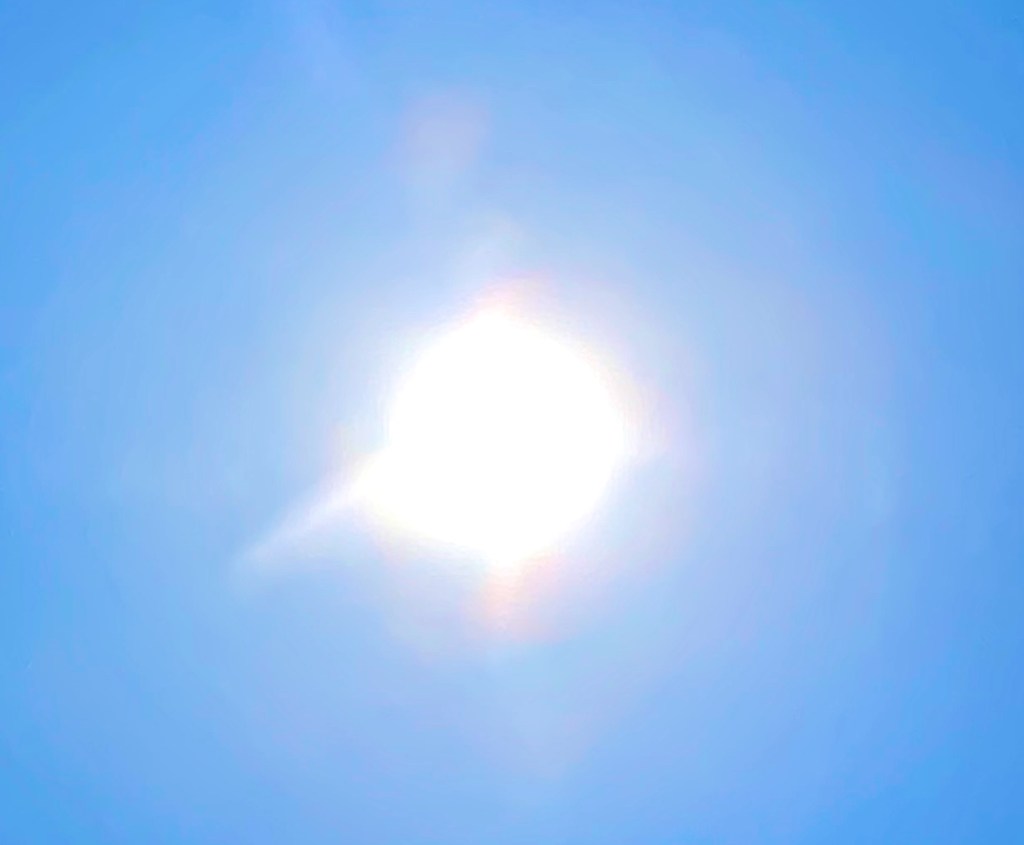
This is what it feels like to nearly succumb to heat sickness:
In July 1982 I am a young journalist traveling alone in Pakistan covering the plight of Afghan refugees. I have been in the mountain town of Gilgit interviewing the chief and many members of the Kirghiz tribe of Afghanistan who had fled their high altitude home in the Afghan Pamirs en masse after the Soviet invasion at the end of 1979 and ended up in this hot dusty, relatively low altitude valley.
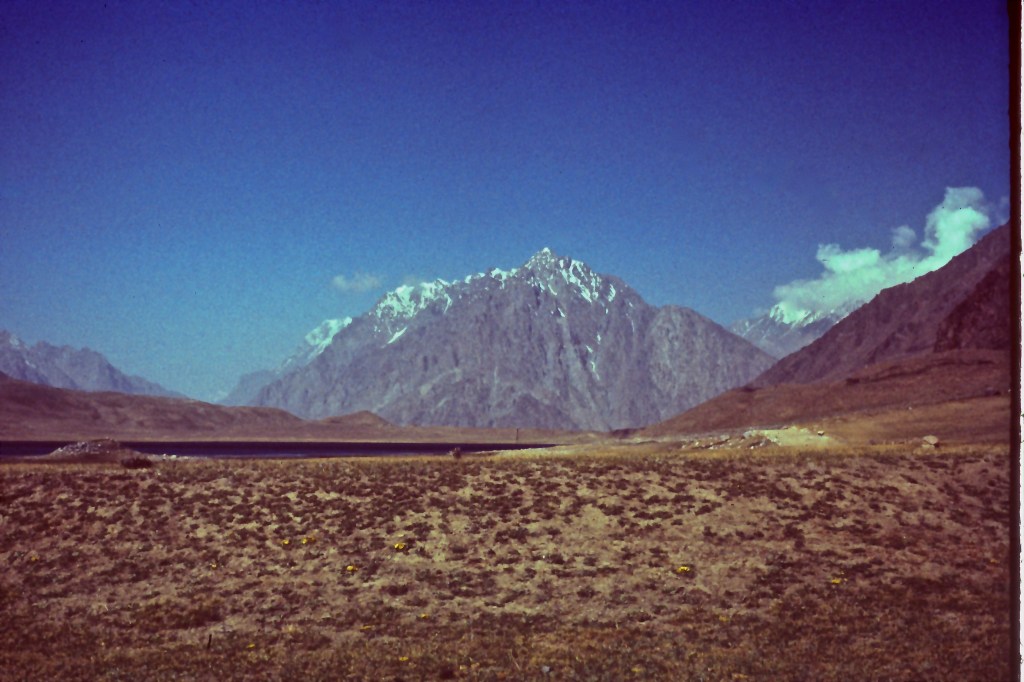
When I’m done with my interviews, I ask my friend Ghulam Mohammed Beg, an Ismaili leader from Hunza, the land of legendary longevity some hours drive up the valley towards the glaciers, to arrange a jeep for me to cross the spectacular 12,200 foot Shandur Pass. For several years I’ve longed to take this route into the Chitral region where the Karakoram Range becomes the Hindu Kush.
The morning I leave, Ghulam Mohammed’s wife impulsively takes a bracelet off her arm and gives it to me for protection. It’s a simple white metal cuff with engravings of verses from the Holy Quran and the names of Allah, Mohammed, Ali, Hassan, Hussein, and Fatimah. Little do I know how much I will need it.
I’m well-provisioned with a canteen (in those days it was a metal canteen with cloth on the outside) and a glass water bottle, so I’m sure I have plenty of water for the journey. I am captivated by the stunning scenery of wide flat glacial valleys between the rugged crumbling mountains that gave the Karakoram range its name, which means “black crumbling rock.”
The lake just below the top of the pass is vivid azure beneath a cloudless lapis lazuli sky. But as we cross the pass and begin our descent towards Chitral a wall of heat that feels almost solid hits us. At first it’s merely unpleasant. I keep drinking my water, knowing how important hydration is.

The heat blasts in waves from the sheer rock walls superheated by the fierce high altitude sun. Inside the jeep, even with all the windows open, the heat radiates off every metal surface. I begin to feel heavy and exhausted. My heart races and my head pounds. My brain has turned to mush and I can’t think straight or keep my eyes open. I sip the last drop of water from my canteen, feeling nauseated as I weakly ask in Urdu how far it is to the next village.
The driver doesn’t hear me above his music, or through his hashish haze. My head lolls and I drift off to sleep, a merciful if fleeting escape. When I wake up we are still in the jeep on and endless road, gears grinding as we make our way down hairpin turns. My world has become a world of heat. Nothing else exists. Sounds are far away, thoughts float and dissolve. I feel my armpits and realize I have stopped sweating. I have enough presence of mind, barely, to realize that I am in extreme danger. I’ve taken an advanced first aid class before embarking on this journey to cover Afghan refugees and the edge of war, and I know enough to tell the difference between mere heat exhaustion and the deadly danger of life-threatening heat stroke. I know I am there.
I keep trying to ask how much longer before we reach a village, but my words are barely above a whisper in my dry throat. I try to think of other things, to pray, to affirm that I’m going to be okay.
Finally after an eternity we pull into a village. I have just enough strength to fling open the door, stagger out of the jeep and throw myself into a filthy irrigation channel. It is water, and I know I have to cool down no matter what. The driver is annoyed at this delay until he realizes how very ill I am. Someone takes me inside and though I ask for “pure water” in Urdu, the kind village teacher gives me water from the irrigation channel. I drink it thirstily but try to sip slowly, knowing that I am risking all sorts of viral and bacterial infections from this water that livestock defecates into. I have no choice.
I have vague memories of two Punjabi doctors in another jeep stopping and giving me an electrolyte rehydration solution, and of the teacher making me green tea with lots of sugar. But since water boils at a much lower temperature at high altitude than it does at sea level, that too is suspect.
Eventually I recover enough to go on. We reach the town of Chitral and I stay in the best hotel, a simple and rustic affair. But because I am in a remote area hundreds of miles from air conditioning, there is no relief from the heat and I will not really feel normal again for weeks. I am subject to spells of feeling faint, and to sudden vertigo. With the arrogance of youth I carry on, sure that this is fleeting.
Three weeks later I will have symptoms of hepatitis A at my best friend’s wedding in Canada. Luckily I will make it home to my parents’ house in L.A. before I am seriously ill, and my mom will nurse me back to full health.
But I will never bear heat well again. Heat that others may regard as mere inconvenience, a somewhat unpleasant annoyance will terrify me. My head and heart pound and I start to feel weak and faint long before most others start complaining. I will earn an undeserved reputation as a whiner.
As I look at the hocky stick graphs of global heating and atmospheric carbon concentration, I now recognize that the early 80s were the turning point when the pollution of burning fossil fuels ever since the start of the Industrial Revolution began to exact its payment for our collective Faustian bargain. Everything I had ever read about the mountains and hill stations of what is now Pakistan and India being the summer escape for colonialists and the elite of the Subcontinent has proven no longer true. The old travel books described cool mountain valleys when all I have experienced is blasting dangerous heat.
About a year and a half later National Geographic will ask me to go on my dream assignment: returning to Pakistan to cover the plight of Afghan refugees, and if I can find a safe way to do it, cross the border into the war zone. A plum assignment for someone not yet 30, and a woman at that, right? But I will risk it by telling them that I can’t possibly travel during spring or summer because I feel like I will die in that heat.
Luckily, I don’t lose the assignment. The editors know that the war will still be going on in a few months. And the photographer they want to send with me has just gotten a rare visa to go to Iraq. So we settle on September, a month with more bearable temperatures as the monsoons wind down.
Decades later I will close a circle when I find out that the Pakistan-based Snow Leopard Foundation is teaching villagers to build predator-proof corrals to reduce human-snow leopard conflict and to encourage peaceful coexistence with them. I write about the project for Voices for Biodiversity and am able to make a donation to that program in Sor Laspur, the very village where my life was saved by kind and timely intervention.
And yet another level of the spiral of life completes when I attend my best friend’s son’s wedding, 41 years later, at the hottest time of the year in Thailand. I go out of love, and I know I will be taken care of and will be safe, so I do not fear the heat.
But I return home to Santa Fe to a searing record-breaking heat wave that has yet to break in early August, and what seems to be a completely failed monsoon season. In July, one of our rainiest months, we get .22 inches of rain instead of the usual 2 inches or so. I feel and hear the land screaming. I watch the flowers stop blooming and the grasses that grew in our wet spring dry up. I hope the bobcats and coyotes are well underground in cool dens, and I worry for the birds. I leave constant water in ground-level birdbaths so squirrels, rabbits, mice, and other rodents can also slake their thirst.
There are heatwaves in China and in southern and central Europe. Southern Europe and parts of North Africa are on fire, literally. UN chief Antonio Guterres proclaims that “we have entered the era of global boiling.” The US, the UK, and Singapore pull their Boy Scouts and Girls Scouts out of the worldwide Scout Jamboree in South Korea because so many young people have fallen ill from heat stress. Perhaps most frightening of all, the Andes Mountains of South America is experiencing a winter heat wave with temperatures of 37 degrees C, over 98 degrees Fahrenheit. Yet the US government will not declare a climate emergency.
I grieve, I cry, I stay indoors. It’s been about seven weeks now, and still no end is in sight. I count the days to the end of the heat season (formerly known as “summer”), 49 as of yesterday, the same number of days that souls wander in the Bardo. I know friends and strangers are suffering far more than I as they try various cooling solutions, order personal evaporative cooling machines online, tie wet gel scarves around their necks, and take unaccustomed naps. People I’ve known for decades who have never ever complained about heat are now miserable. Our lives are disrupted. Friends left the opera—where 20 years ago you needed to wear a shawl or jacket in the evenings after cooling monsoon rains caused evening temperatures to plummet—because it just wasn’t enjoyable. I miss a dance performance I really want to go to because the venue is not air conditioned and I know I can’t appreciate it if I feel light-headed and sick. I deeply resent having to forego fun, interesting, meaningful events and gatherings because I feel I can’t go out in this heat.
Of course these are mere sad inconveniences compared to the crop failures that are becoming more likely. My little pandemic Christmas tree, an Austrian pine I had planted last year and which was fine two weeks ago, has suddenly browned and probably died. A friend is told at the farmer’s market that New Mexico’s famous Hatch chile crop is barely growing in the extended heat. And there are the unhoused in Phoenix and Albuquerque, and the prisoners dying in Texas jails without access to life-saving air conditioning.
I know I am lucky and privileged. It is no fun being one of the proverbial canaries in the overheated coal mine, a statement that contains layers of ironies. I hope it is not my fate to die of heat stroke or to have a cardiac event brought on by excessive heat. As an empath, I feel for the suffering humans and the suffering wildlife and our animal companions.
This heat feels unnatural because it is. It is NOT part of Nature, but human-caused. I don’t buy the individual responsibility line that the corporations have foisted on us. If you only become a vegan (wink wink, but buy plenty of processed corporate food) or if you only take fewer long haul flights to see family or learn about the world (smirk smirk, but make sure you fly OUR airline if you do)…
No. It’s not your flight to visit your new grandchild. It’s not your occasional grass-fed burger. It’s not running your AC for your health and comfort and so you can work at home. The responsibility lies squarely at the feet of those who have run the multi-national corporations, including but not limited to fossil fuel companies, and who have colluded to keep the detailed frighteningly accurate predictions about global heating a secret. They have deliberately disseminated disinformation and confusion in the public mind. They knew the dangers, and they lied to humanity and hid the knowledge of the danger, all in the name of greed.
We can only go forward now, hoping against hope. My own choice is to not settle for adaption to a horrific “new normal,” or even the mitigation of trying to keep the temperature rise, (at about 1.2 degrees C, and temporarily exceeding 1.5 degrees, it’s already this bad) to some arbitrary number. That is a failure of the human imagination and will.
For myself, I choose to follow the lead of youth organizations like Sunrise Movement in the US and locally YUCCA, Youth United for Climate Crisis Action.

I choose to support Natural Climate Solutions and Regenerative Agriculture. I choose to support the call of Senators Bernie Sanders, Elizabeth Warren, Jeff Merkley, and Ed Markey to the US Department of Justice to take legal action against the fossil fuel companies for their knowing ecocide. Their letter states in part: “The actions of ExxonMobil, Shell, and potentially other fossil fuel companies represent a clear violation of federal racketeering laws, truth in advertising laws, consumer protection laws, and potentially other laws.”
I may need to move to a cooler climate and hope it stays that way for the remaining decades of my life. I need to be somewhere where I can function and can remain an activist while maintaining my health. I’m not sure where that is.
When I almost died of heat stroke I felt there was no escape. When I look at the climate news and the heat maps, I do wonder if there is any place to escape to. And yet I live in hope, because I must. Doom is not an option. Giving up is not an option. As an intuitive reader, I still see futures for my clients’ and friends’ children and grandchildren that don’t involve living in a bunker underground completely separated from Nature, or going to Mars as retainers of the Earth-hating billionaires. Other psychics and astrologers agree with me. No, it’s not scientific, but now, out of need and desperation, I feel we, I, must move beyond the solid reductionist Western scientific approach, valuable as it is, into the myriad modes of perceptual diversity. Here at what sometimes feels to be the end of all things, I chose hope and vision, re-visioning, re-imagining, re-creating a truly transformed normal.
Debra Denker is the author of the time travel novel Weather Menders, a cli-fi novel for the hopeful—complete with a telepathic time-traveling cat.

 Weather Menders