An Engaging and Thought-Provoking Cli-Fi Novel
I found myself pulled into the world of author Mona Shomali’s Water Mamas on the first page, which paints a mysterious dream vision of a mermaid-like female spirit figure with an urgent message for the book’s main character, Afa.
Set in the not-too-distant future, the book’s narrative depicts an imaginary—and at this political point nearly unimaginable—world of international cooperation under the auspices of the UN to create large-scale mitigation solutions to climate breakdown. Afa is a confident young Polynesian woman who has made her way in the world of international diplomacy after she and her family were forced to leave their homeland of Tuvalu, the South Pacific island that by the time in which the novel is set no longer exists because it has been submerged by sea level rise.
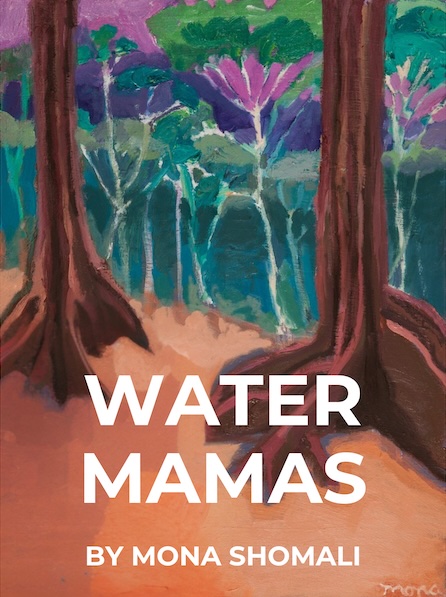
The Amazon basin, the source of much of Earth’s water cycle, has been reduced to “patches” of rainforest amongst drought-ridden savannahs maintained by Indigenous peoples with varying degrees of success. Afa is tasked by the UN’s Climate Modification Department to convince the Indigenous Macushi people of the Amazon region of Guyana of the value of rocket-created rainmaking technologies used successfully in China and California, though in some parts of the world there are concerns that chemicals such as silver iodide could be harmful to the environment.
Afa’s worldview straddles and attempts to bridge her own Indigenous background and the seemingly well-meaning approach of Western science. She feels the urgency of doing something effective to rebalance water cycles on a planetary scale, and at the same time honors the ruling of the Inter-American Court of Human Rights that Free, Prior, and Informed Consent is required for projects that affect Indigenous people’s lands.
Afa is warmly welcomed by both the Macushi and the local science station. The landscapes of the Amazon environment are vividly drawn in a way that makes the reader feel they are experiencing both the rich biodiversity of the remaining patches of rainforest and the bleakness of the devastated land around them.
Afa is at first taken aback by the questions and opposition of some tribal elders. They are concerned with both potential negative effects on the environment and with offending the spirits of the Water Mamas who are inextricably intertwined with the rivers and jungles of their land.
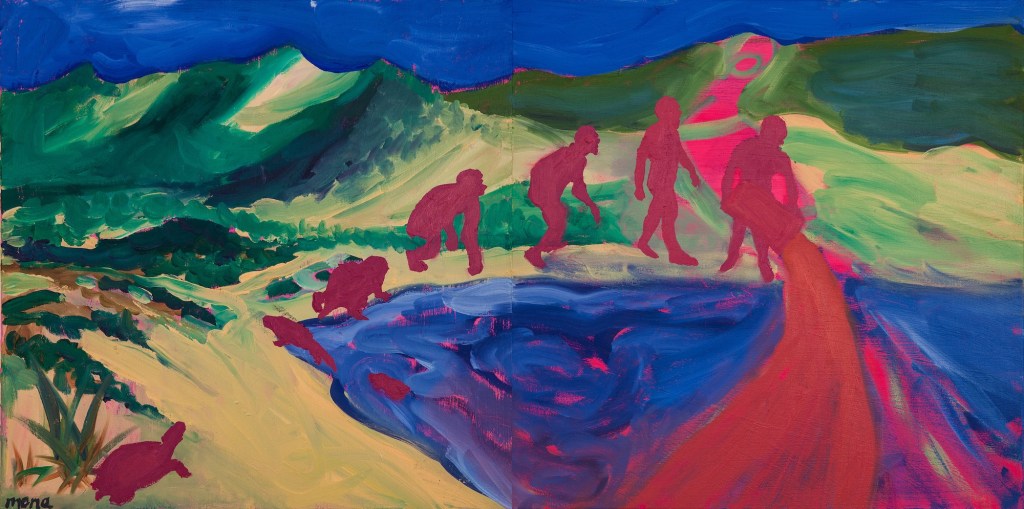
Afa is a quick, curious, and sympathetic learner and listener as she navigates the conflicts between the urgency of implementing worldwide climate mitigation solutions before it’s too late and respecting Indigenous human rights. Will she succeed in convincing the Macushi of the wisdom of the rainmaking technology? How will her own views evolve, influenced by the land itself, its inhabitants, and the dreamscape? What will she report to the UN? Will she be able to co-create a synthesis between ancient Indigenous connections with the spirits of the land, their sovereignty and human rights, and the potentially climate-balancing Western technology?
It was refreshing to read a novel with a range of finely-drawn characters from many cultures rather than the white Western dominant monoculture that seems to populate most novels and films. No “white savior” narrative here! Interestingly, Afa’s boss at the UN, Kwame, vigorously defends the Western approach, despite his own roots in Ghana.
For me the narrative raised the question of patriarchal systems being the true root of climate breakdown and transnational capitalism, a form of neocolonialism. There is an eco-feminist subtext in Afa’s challenges interacting with men, including those from cultures outside white Western monoculture, who still attempt to dominate her in overt or subtle ways. Afa’s boss Kwame initially disregards her considerable capabilities and and questions her approach in dealing with the Macushi and their hesitations to sign on to the rainmaking project. He dismisses their spiritual concerns offhand, aligning instead with the purely scientific approach. Afa must grow in confidence to stand up for her own beliefs. On a personal level, she has to make choices about her attraction to the Indo-Guyanese scientist who doesn’t seem to think he needs to share that he is engaged and instead makes the assumption that polyamory is just fine with her.
Water Mamas is as much about Afa’s own journey of self-reflection and overcoming self-doubt instilled by her domineering father as it is about finding ethical solutions to climate breakdown while honoring the rights and sovereignty of the Indigenous people who did the least to create the climate crisis and are suffering most and first.
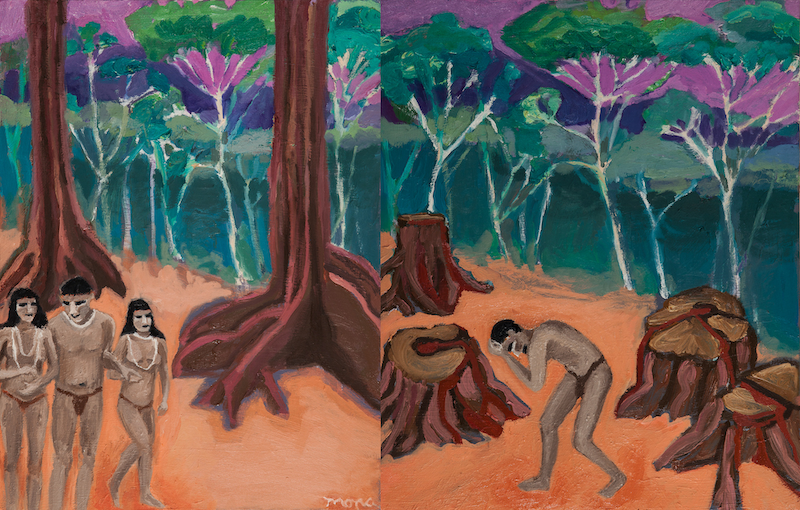
I quickly came to admire Afa. I cared about all of the characters, major and minor, likeable and less so, which to me is the mark of a good novel. Her sisterhood friendship with her best friend Aliah back in New York supports her questioning journey. Aliah is a true friend, funny, loving, and radically honest. Even as the two friends engage in ordinary activities like swimming or going to a museum, Aliah doesn’t shy away from expressing her opinions and asking Afa hard questions.
How will Afa balance her UN job, her understanding and respect for Indigenous sovereignty and human rights, and the possibilities and pitfalls of combining science and spirituality to rebalance Earth’s swiftly deteriorating climate system in ways that will be beneficial for all?
Read the book to find out! Mona Shomali has set herself and her character up nicely for a sequel, which I eagerly look forward to.
A bit about Mona from her author biography at her website:
“Mona Shomali is an Iranian American author and visual artist driven by a singular purpose—to explore how we navigate competing morals and worldviews. Her unique background, steeped in Indigenous Human Rights and Environmental Science, informs her brush and her prose.“

Mona’s book is full of information as well as compelling story, and has a detailed Author’s Note at the end on The State of the Amazon and Indigenous People’s Human Rights. For additional information, read these articles in the Guardian: “It’s All About Sharing: Indigenous Solutions to the Climate Divide” and “Braiding Knowledge: How Indigenous Expertise and Western Science are Converging
Debra Denker is the author of Weather Menders, a cli-fi time travel novel for the hopeful.

 Weather Menders