Maybe now is not the best time to read novels or watch films set during World War II or the Weimar Republic. Or maybe it is the best time for those people who have forgotten or never learned of the horrors that fascism visited upon this world during the 1930s and 1940s, resulting in some 75 million deaths from combat, bombings, concentration camps, starvation, and illness.
As I recently read yet another novel set during the war—The Lost Book of Bonn by Brianna Labuskes, which chronicles German resistance in the early days of Hitler and during the war—I couldn’t help but wonder why novels, TV series, and films set in that era have become so popular in the last few years.
Then it occurred to me: there is a Great Forgetting that all this storytelling is attempting to jolt us out of. Perhaps the collective unconscious is urging us to wake up before it’s too late and new iterations of fascism have decimated our increasingly fragile democracies, our ideals of human rights, and the very future of our planet due to its obscene coupling with climate denialism.
The last of those who fought fascism before and during World War II—directly in combat, serving on home fronts in the military, or working in factories, farming or other support roles—are dying out. The last Holocaust survivors—Jewish, Communists, intellectuals and artists, gays, Romany, or resistors—are leaving the planet and taking their stories with them.
The Greatest Generation Fought Fascism
Not long ago I attended the funeral of a friend’s dad who died at age 98. John Versace, proud of his veteran status, wanted a funeral with military honors at the National Cemetery, but not a 21-gun salute. During World War II he had served as a radar technician in the US Navy on a destroyer in the Pacific. After the war he earned a PhD in experimental psychology, and went on to a meaningful career in automotive safety research. As I stood near his adult children and grandchildren, watching the folding of the flag and listening to Taps, I reflected on his legacy of fighting fascism and how it resonantly echoes into our present era threatened by a major political party that has all but abrograted any semblance of democracy as its candidate sneers chillingly that “you’ll never have to vote again” if he is elected.
How could anyone other than billionaires, some cryptocurrency enthusiasts, and white nationalist “Christians” support fascism unless the Great Forgetting has erased their memories and knowledge of history?
Many people of my post-war Baby Boomer generation grew up hearing our parents’ stories and those of our friends’ parents. Some saw action, many of whom came home proud of their service. Others returned angry and traumatized, never quite “right” again, because that’s what war does to a lot of sensitive souls. Some carried lifelong prejudices against other cultures and wouldn’t let go of pejorative terms for people who had become allies of the US in the post-war world.
Some served as journalists. One friend’s dad covered combat missions. My dad was never deployed overseas, but worked in public relations for the US Navy stateside. My mom worked in a military shirt factory. My friend Tsosie’s dad and uncle were Navajo Codetalkers. My best elementary school friend Erin’s Japanese-American parents, then in their teens, were both forcibly sent with their families to the “relocation” camps.
The “Greatest Generation” grew up during the hard times of the Great Depression and came of age just before or during World War II. My dad joined up as soon as he graduated from high school a few months after Pearl Harbor. The Navy immediately put him in Officer’s Candidate School and utilized his considerable photography talents. He was not someone who would have been attracted to a military life, as he had an artistic temperament, but he joined out of patriotism and the desire to be part of the fight against a great evil.
The most casual student of history is surely aware of the huge human toll—and environmental as well, though that was not tallied or discussed in those days—that fascism took on the world in the 30s and 40s, the sheer amount of death, wounding, mental trauma, and suffering that it caused.
Now it’s Our Turn, 80 Years Later
Which is why it is stunning to watch rightwing movements, some openly and even proudly fascist or neo-Nazi, resurging in Europe, the US, and throughout the world. I can only conclude that as Baby Boomers are beginning to die off, somehow we have not passed the stories down to the generations of children, grandchildren, and godchildren.
France recently repudiated fascism, but now faces uncertainty with a divided parliament. In a country that suffered under Nazi occupation and had a heroic history of resistance, it is shocking that a third of voters supported the extreme right, the National Rally party that embodies the opposite of empathy and compassion. Rightwing nationalism, from France to Italy, Russia to India, England to Israel, promotes an “us vs. them” mentality, with empathy reserved for the chosen “in group” based on ethnic and/or religious identity, the patriarchal heterosexual nuclear family, and its immediate homogenous community. It is the opposite of the idealistic internationalism that was the foundation for the UN—admittedly flawed as an institution—and its many agencies that have served refugees, children, education, health, and peacekeeping, albeit imperfectly.
The UK and France, for the moment, have pushed back, and even Iran has elected a somewhat “reformist” candidate. But the US is daily threatened with being engulfed in a tide of fascism every bit as dangerous and overwhelming as literal sea level rise, which reality they deny.
I live in Santa Fe, a liberal to progressive enclave. Or so I thought. Lately I have seen fascist bumper stickers on cars in the parking lots of natural foods stores. An angry cashier proclaims “he is the one who is going to save us” after I, unwisely, made a disparaging remark about the former occupant of the White House as I made the assumption that anyone shopping there is liberal to progressive. A young woman in line behind me says darkly to the cashier, “she’s not one of us,” clearly referring to me, which left me speechless and chilled.
I am stunned and stumped to think that these fellow citizens have been seduced through—what? Social media? Obscure conspiracy websites? YouTube videos that make up shit? Fox News and other rightwing outlets? I wonder if these women I thought I had something in common with in our interest in eating healthy organic food would come after me and my friends who are not “one of them” if their candidate wins—or support another insurrection if they lose?
My Friend the Hero Who Rescued Refugees in Marseilles with Varian Fry
I recently read a best-selling novel set in Vichy France during World War II called The Postmistress of Paris, by Meg Waite Clayton. The fictionalized story included actual characters who worked with Varian Fry and the Emergency Rescue Committee in Marseilles in the early days of the war in “unoccupied” France. I knew that they had shepherded around 2000 refugees—many of them artists and writers of note and most of them Jewish—to safety in the US. I had a particular interest because an old friend from my days as a journalist covering the Soviet-Afghan War in the 1980s, the late Charles Fernley Fawcett, had worked closely with Fry.
I did not expect Charlie to be a character in the novel, and it brought tears to my eyes to examine the nature of courage and of Charlie’s remarkable life fighting for a nuanced variety of causes—sometimes fighting fascism and sometimes against totalitarian Communism, depending on time and circumstances.
I only found out about Charlie’s heroic and risky activities during World War II on my last visit with him in London in 1998. He was in his 80s by then, and over a cup of tea casually mentioned that he was going to be in a documentary film about Varian Fry because of his work helping rescue Jews through Marseilles. He joked lightly about having “married” several Jewish women to get them out of France.
I stared at him in shock and admiration. He merely shrugged and smiled, with the usual twinkle in his blue eyes. “I never talked about it,” he said. “My own wife [April Ducksbury, a British modeling agent he had known and loved for years] never knew about it till now.”
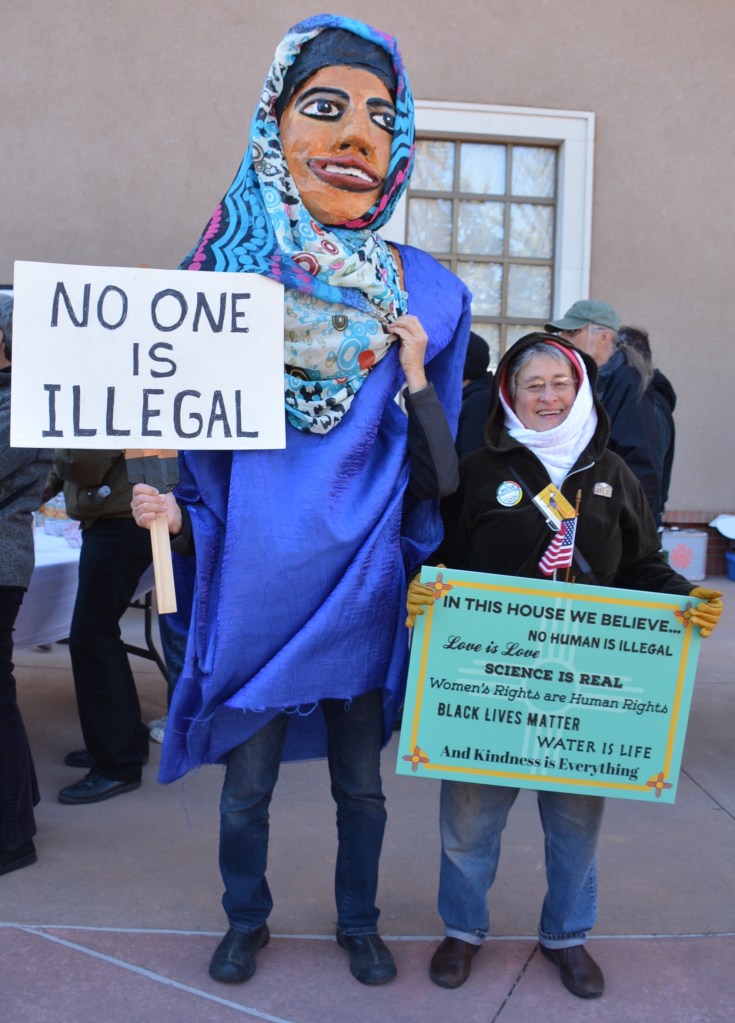
We were lucky that the country and the world survived #45.
I first saw Charlie at the airport in Peshawar, Pakistan, in the early days of 1981 when I was returning from my first National Geographic assignment on the winter solstice festival of the shamanic Kalash tribe of the Hindu Kush mountains. I noticed him and his Pakistani film crew because his snowy Santa Claus beard and imposing physical presence cut a fine and memorable figure.
Two months later he walked into my dad’s advertising agency in Hollywood. A friend of my dad’s had met someone at an art opening who was making a documentary on Afghanistan and needed a film editor. Knowing my connection with the Afghan people and the fact that I was sponsoring a family of refugees to come to the US, he suggested Charlie contact me.
I recognized Charlie the minute he walked into the office. “Were you on a plane from Peshawar to Rawalpindi on January 6th wearing a gray shalwar kameez with embroidery at the collar and a green nylon down vest and traveling with a Pakistani film crew?” The man who many journalists and aid workers later suspected might be CIA was nonplussed. “Well, I might have been,” he answered, disarmed.
My dad let me use the editing facilities on my own time, and I agreed to cut Charlie’s documentary, Courage is Our Weapon, down from an hour to half an hour. I was impressed that he knew Orson Welles, who had narrated the film. However Charlie neglected to mention that I was editing the only copy, so I cut out what I regarded as unnecessary scenes of some blond Texan woman with big 80s hair. This did not please Joanne King Herring, a wealthy conservative American supporter of the Afghan cause against the Soviets.
Remember the Tom Hanks movie Charlie Wilson’s War? Well it was Charlie Fawcett, mentioned in the book but not the movie, who introduced Joanne Herring and Congressman Charles Wilson, who became a champion of providing rockets and other advanced arms to the splintered parties of the Afghan Mujahedeen, the anti-Soviet freedom fighters who ranged from moderate Islamic democrats to rightwing Islamist ideologues and zealots. The latter were the ones who got most of the US arms and money, and later teamed up with a Saudi man named Osama bin Laden.
Charlie knew an awful lot of celebrities, from Hollywood actors like Orson Welles to fashion design retailer Fred Segal to politicians who were mostly, but not exclusively, rightwing Republicans. He had a large personality that sometimes seemed swashbuckling and other times embarrassingly buffoonish. Everyone knew when Charlie entered a room. But occasionally the mask would drop and I would notice him in a quiet corner of a refugee fund-raiser in serious conversation with a member of the Afghan royal family.
There was clearly much more to Charlie than met the eye. He would casually namedrop King Hassan of Morocco, Saudi businessman and arms dealer Adnan Khashoggi, or his good friend President General Zia-ul-Haq of Pakistan. Though I was young I was possessed of a healthy skepticism and took it all with a grain of salt. Until one day I found myself in Pakistan with serious visa problems because journalists were not welcome during the Movement for the Restoration of Democracy demonstrations. I pulled out the old-fashioned Southern gentleman-style calling card with Charles Fernley Fawcett printed on it in a fancy font, and the words, “please assist the bearer” written in Charlie’s hand inside, and called the office of the Pakistani Minister of Information of the military junta of the moment.
“Hello, I’m a friend of Charles Fawcett’s…” I began.
The man who answered the phone gushed, “Any friend of Charles’ is a friend of Pakistan. When do you want to meet the general? We will send a car for you.”
So it was all real. Charlie really did have an honorary Pakistani medal. And, as I discovered years later, a French Croix de Guerre and an American Eisenhower medal.
As a result of this connection, a visa that could never be extended was renewed. I was put in touch with the government press liaison in Peshawar, who introduced me to an American film crew for whom I worked as a Dari field translator. Videographer Judith Mann and I ended up co-producing the footage as the documentary A Nation Uprooted.
It wasn’t until I read The Postmistress of Paris last year and then researched Charlie online that I came to know the full extent of his heroism during World War II. He overcame a difficult childhood of loss to travel the world. He dabbled in sculpture and became a wrestler, which is what apparently caused Varian Fry to take him on as a doorman for the refugees who came to Fry for help.
Charlie was a trumpet player, a life of the party sort of guy, a good cover for someone engaged in secret rescue. He sometimes carried clandestine messages in the valves of his trumpet and learned to play songs that didn’t use those valves. Several times he guided refugees to safety on the perilous route across the Pyrenees to Spain, from where they could get to Lisbon and thence to the US.
When Fry’s operation was shut down—after they had gotten some 2000 people including luminaries like artist Marc Chagall, surrealist poet and writer Andre Breton and his wife, and the political philosopher Hannah Arendt to safety in the US—Charlie trained as a fighter pilot with the RAF. A recurrence of childhood tuberculosis grounded him temporarily, but as the war dragged on and he recovered, he made his way to Italy and rejoined the American Ambulance Corps. There was also a stint in the French Foreign Legion in Africa towards the end of the war.
I and other journalists and aid workers who knew Charlie in the 1980s knew nothing about all this, just that he had been a B movie actor in the 50s and 60s and seemed to know an awful lot of famous and powerful people across political and cultural spectrums. He was passionately dedicated to the cause of the Afghan people as they fought what seemed a hopeless struggle against Soviet occupation.
Charlie forgave me for cutting Joanne Herring out of the documentary, which went on to move many hearts in sympathy with the Afghan cause. Joanne wasn’t too pleased, but I kept my distance from the more rightwing supporters of the Afghans, as I disagreed with them on almost every other issue.
But Charlie was a true non-aligned hero who repeatedly risked his life to save others’ lives. I know now that he understood nuance. He was no ideologue but made alliances where and when it felt right for a higher good.
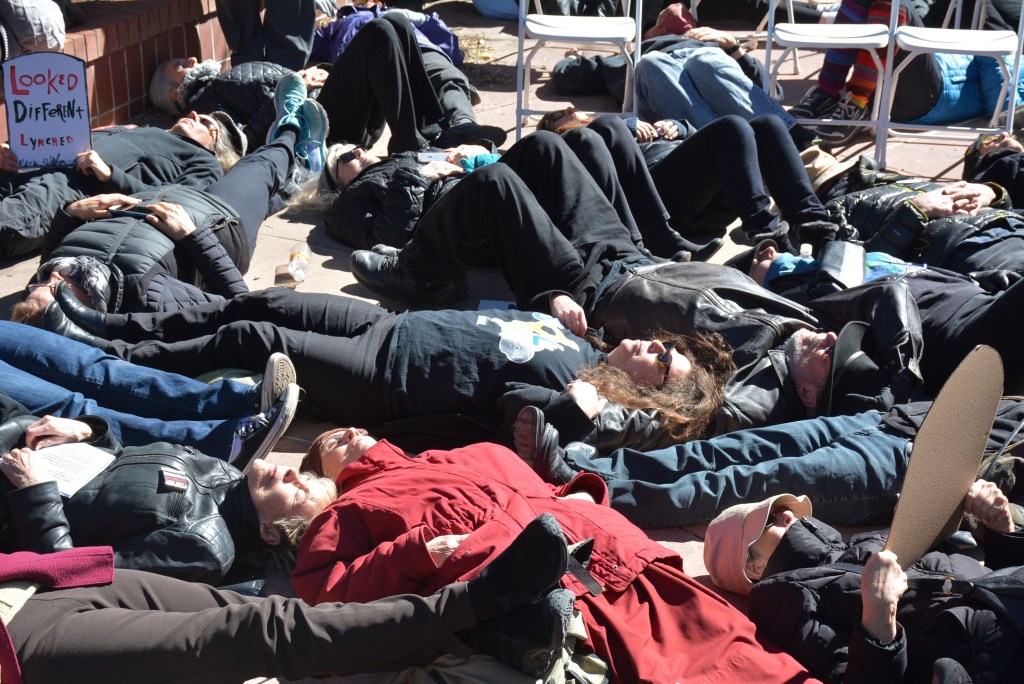
eerily prescient of the damage that #45 would do through
mishandling the pandemic, ripping families apart at the border, denying climate change
—the list goes on.
What Would Charles Fawcett, Varian Fry, and Hannah Arendt Do Today?
Today I wonder what he, and what one of the people he helped rescue, Hannah Arendt, would make of today’s upside-down twisted mirror-world politics. Arendt was one of the foremost political philosophers of the 20th century, and came to be known for coining the phrase “the banality of evil” while covering the trial of Nazi Adolf Eichmann for The New Yorker.
We live in a world where a former KGB agent, Vladimir Putin, paints himself as a Russian Orthodox Christian homophobic nationalist and invades Ukraine, a mostly democratic country where some neo-Nazi militias join the regulars fighting the occupation. In India, Prime Minister Narendra Modi, considered by many to be responsible for not stopping riots in which some 2000 Muslims were murdered when he was First Minister of Gujarat, promotes Hindu nationalism alongside the RSS, the organization to which Mahatma Gandhi’s assassin belonged.
Italy, Argentina, Hungary, Turkey all currently have authoritarian leaders who have at least flirted with fascism. Surely Hannah Arendt—who came to be a supporter of a one-state solution in Israel-Palestine in which Israelis and Palestinians could live side by side as peaceful equals—would be horrified by Israel’s current government under the leadership of accused war criminal Benjamin Netanyahu and the extreme rightwing religious cronies keeping him in power and out of prison for corruption and negligence as his government decimates and starves civilians in Gaza.
What would Charlie Fawcett and Hannah Arendt do in the face of what the International Court of Justice has called Israel’s “plausible genocide” against Palestinians in Gaza? And how would they respond to the atrocities committed by extreme patriarchal Islamists—Hamas, Hezbollah, the Iranian Ayatollahs and the Afghan Taliban?
How would they view the ominous Project 2025 and the threats of “retribution” by the former occupant of the White House against any who oppose him?
I would venture a guess that both of them—from such different backgrounds, the rescuer and the rescued—would do everything possible to fight fascism and any other form of authoritarianism, injustice, and human rights violations in any country.
When I was 15 I had a dream that fascists had taken over the US in the aftermath of a massive natural disaster that had made the San Fernando Valley an ocean. My boyfriend, an activist who led our high school free speech movement, and I were floating down a river avoiding searchlights as we heard soldiers screaming orders to “spike anyone who sets foot in the river.” Was this a past life memory of World War II, a dream from reading too many dystopian novels, a glimpse of my later time in Afghanistan with the Mujahedeen, or a possible future in the US? The dream left a terrifying impression on me, and made me resolve to fight totalitarianism of any stripe.
May the spirits and inspiration of Charlie Fawcett, Varian Fry, and Hannah Arendt help us to defeat the dark rhyme of the history of nearly 80 years ago. May their various expressions of heroism guide us in making the moral decisions to co-create a world of kindness, diversity, equality, equity, justice and inclusion. We MUST transform to this better world—and quickly—so people of all nations can work together as one to transmute the climate breakdown, environmental ruin, and extinction that threaten us all.
What choice will I make? What stand will you take? Will we have the courage of our recent ancestors to stop fascism in its tracks? The choice becomes daily more stark and clear.
Debra Denker is the author of Weather Menders, a cli-fi time travel novel for the hopeful.

 Weather Menders
I’m afraid I have to disagree that the current generation is headed toward fascism. Anecdotal evidence witnessed at the grocery store isn’t really a gauge for the rest of society. Those in the fascist movement are primarily boomers who practice grievance politics and resent the dissolution of the old days when white males had no competition for jobs.
The world is becoming more tolerant due to globalism, exposure to other cultures, science and technology, and the influence of the internet. The resistance to Zionist policies, for instance, grew from within Israel; the younger generation simply didn’t want to live in a state of war and violence. They’re smarter than their ancestors. I firmly believe that Gen X, Y, and Z have our futures at the forefront of their minds. They don’t want to repeat their grandparents’ mistakes. They’re quite vocal about this, in fact.
Hi Mimosagal. Thanks for your perspective. I really appreciate it. I didn’t mean to imply that Gen Z is headed towards fascism. In fact, the great majority of people I know in that generation (and others) are activists. I support Sunrise nationally and YUCCA (Youth United for Climate Crisis Action) locally by attending climate rallies and Gaza support rallies and through some donations. I’m so impressed with the people I meet. I just get concerned when I see that some young people, here and in other countries, seem to be attracted to fascism. I think they are a minority, but I also think that the lessons of history from World War II remain important. One of my previous blogs was on the Youth Climate Strike in Santa Fe, back in 2019. So I totally respect our activist youth and feel that I and my friends of my age have got your backs. Statistically supposedly white women over 65 were majority for T____ in 2020, but I don’t know any of those people. People with those views don’t read cli-fi blogs, climate fiction, or come for energy healings, intuitive readings, or animal communication so I just don’t meet them. And I hope you are right about Israel. My friends there are peace activists and I know over 70% of people want N_____ gone ASAP. Thanks for reading my blog and thanks for your comments.